
Optionally piloted aircraft: the hybrid future of special operations

A new flight regime. David Pearl and Jon Adams report on the extant and planned optionally piloted aircraft that are being used for multi-mission applications
Autopilots have been commonplace in fixed-wing aircraft for a while, taking control and maneuvering the aircraft in a range of situations. For decades, though, helicopters have been defined by a simple truth: someone must be in the cockpit. Whether rescuing a stranded climber, evacuating a wounded soldier, or dropping water on a wildfire, the helicopter has always been a crewed machine.
But that assumption is now being challenged.
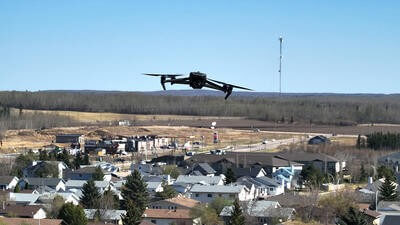
Advances in fly-by-wire controls, four-axis autopilots, artificial intelligence, and remote-operation systems have created a new category of aircraft: optionally piloted aircraft (OPAs). These hybrid platforms can fly with a pilot on board or operate remotely like a drone, switching modes depending on mission needs. For fixed wing and rotary wing alike, the technology is advancing to levels not seen before.
The implications are profound. If a helicopter can fly into a hot zone without human souls on board, what missions will still need human input? And how will autonomy reshape the future of search and rescue (SAR), medevac, firefighting, and military operations?
Pilot optional
An OPA is a rotorcraft or fixed-wing platform designed to operate in two modes:
- Crewed: a pilot flies the aircraft normally
- Uncrewed: the aircraft is flown remotely or autonomously.
- Key technologies that enable this ability to fly without a human operator in the cockpit include:
- Four-axis autopilots
- Fly-by-wire controls
- AI-assisted flight management
- Electro-optical and infrared (EO/IR) sensors, radar, lidar
- Secure data links
- Autonomous obstacle avoidance.
OPAs occupy a unique middle ground: the capability of a helicopter with the risk profile of a drone.
Who uses OPAs today?
Although OPAs are still emerging, several organizations have already used them in real-world missions. These examples are fully documented and validated through official military releases, original equipment manufacturer (OEM) press materials, and public-domain imagery.
The US Marine Corps remains the strongest operational example of OPAs in real-world use. Between 2011 and 2014, the uncrewed Kaman K-MAX (modified by Lockheed Martin at the time) delivered more than 4.5 million pounds of cargo to forward operating bases in Afghanistan, flying autonomously or under remote control, with additional deployments afterward.
The aircraft operated in active combat zones, reducing risk to helicopter crews and proving that OPAs could perform dangerous logistics missions reliably
The aircraft operated in active combat zones, reducing risk to helicopter crews and proving that OPAs could perform dangerous logistics missions reliably. The success of the trials in Afghanistan with the US Marine Corps and the Near Earth Autonomy sensor-based autonomy suite led Kaman to announce in 2021 that its K-MAX Titan variant for the commercial market had performed its first flight. This commercial variant would be available as a retrofit on existing aircraft or as an option on new ones. The Titan was a response to the interest from Kaman’s customers. At the time, Darlene Smith, President of Kaman’s Air Vehicles and Precision Products Divisions, said: “Kaman leads the way with innovative solutions for our customers that are reliable, affordable, and sustainable. K-MAX Titan is no exception, whether the mission calls for firefighting, humanitarian assistance, or distributed logistics.” Sadly the fortunes of Kaman hit hurdles, and it was announced at the start of 2023 that the production of the K-MAX and K-MAX Titan was to cease.

In 2022, the US Army and Sikorsky flew a full-size Black Hawk with no crew on board, using the MATRIX autonomy system. The aircraft executed autonomous takeoff, landing, obstacle avoidance, and simulated logistics missions.
While not yet used in combat, these demonstrations show how OPAs may support future army missions with the first optionally piloted H-60Mx Black Hawk being delivered to the US Army in March 2026. The aircraft will now go through a series of rigorous tests to determine its value to the force and whether the Army wishes to advance with further optionally piloted platforms of this model. The development of the MATRIX technology and fitting the Black Hawks with fly-by-wire control systems were instrumental in the ability of this platform – which has its origins in the 1970s – to be compatible with the demands of today’s theatres of war.
NASA has conducted extensive research into autonomous flight systems, including optionally piloted configurations for landing, obstacle avoidance, and degraded visual environments. These platforms support the development of OPA technologies for future civil and military use. For instance, working with Reliable Robotics, NASA has begun trials for the autonomous flight of an optionally piloted Cessna 208B Caravan. This follows a US$17.4 million contract from the US Air Force where it anticipates the aircraft will be used on overseas deployments, where austere environments and reduced pilot availability are limiting stressors on operations. It is not just the smaller craft that Reliable Robotics is developing for the Air Force, but also heavy craft such as the KC-135 Stratotanker, where optional autonomy during “refueling, cargo transport, and joint operations with coalition military forces will allow pilots and crew to focus on higher-complexity tasks,” said Colonel Lisa A Nemeth, Deputy Director Strategy, Plans, Requirements, and Programs at the US Air Force’s Headquarters Air Mobility Command A5/8.
Optional autonomy during refueling, cargo transport, and joint operations with coalition military forces will allow pilots and crew to focus on higher-complexity tasks
Several commercial uncrewed aerial vehicle (UAV) operators in Canada and the USA have converted Robinson R44 and R66 helicopters into uncrewed platforms for agricultural spraying and utility inspection. These aircraft operate under special flight permits and represent the first steps towards the commercial adoption of OPAs. Skyryse has developed the Skyryse One, which adds a host of automated features into a Robinson R66. The success of this conversion led to Robinson partnering with Skyryse in June 2026 to integrate the SkyOS autonomy system into the R66 platform and develop a Group 4 uncrewed aircraft system (UAS) for defense applications. Robinson’s R66 Turbinetruck and R44 Airtruck and Sprayhawk platforms, meanwhile, use Sikorsky’s MATRIX technology and Rotor Technologies’ RPX system, respectively, for fully uncrewed missions.
Boeing’s Aurora Flight Sciences has created the Centaur platform hosted in a modified Diamond DA42. This optionally piloted platform is used primarily for flight testing and training drone operators. Aurora says it is ideal for a “range of R&D missions across defense, intelligence, law enforcement, and environmental research”.
Early tests for UAVs required surrogates to mimic the conditions of a UAV but without the restrictions of cost, risk, availability, and regulations that a fully remotely operated beyond-visual-line-of-sight craft would be subject to, so the US Naval Postgraduate School Center for Interdisciplinary Remotely-Piloted Aircraft Studies (CIRPAS) modified a Cessna 337 O-2 Skymaster into an OPA called the Pelican to become an analog for Predator drone testing and training.
Who does not use OPAs yet
While one might assume that OPAs are already widespread, they are not.
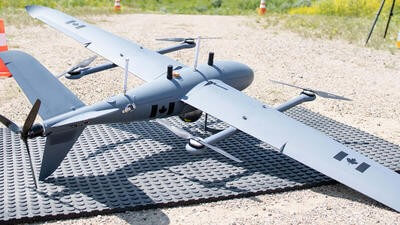
The US Coast Guard makes use of the Boeing ScanEagle and General Atomics MQ-9 uncrewed aircraft in concert with its crewed aircraft. It is evaluating autonomy for future SAR missions.
SAR agencies from Norway, Italy, the UK, and France have no OPAs in service as they rely on advanced autopilots to assist the pilots on the platforms they use (AW101, AW139, H225, etc.) while conducting challenging missions, but they are monitoring OPA developments.
The Australian Defence Force is evaluating autonomy for future aerial platforms, while the Australian Army has converted over 20 M113 AS4 armored personnel carriers into optionally crewed combat vehicles.
The OEMs leading the OPA revolution
Already in the optionally piloted H-60Mx Black Hawk, Sikorsky’s MATRIX autonomy system is one of the most advanced OPA technologies in development, and its applications for uncrewed aircraft are being used across a range of platforms.
Leonardo’s SW-4 Solo is a light helicopter designed specifically as an optionally piloted demonstrator. It has flown autonomously in European Defence Agency trials.
Airbus originally developed the VSR700 in 2022 as an optionally piloted derivative of the Guimbal Cabri G2. Over time, the French Navy shifted the program to a fully uncrewed maritime drone, and Airbus has since (in June) announced it is fully autonomizing one of its own platforms, the H145, into the U145 and the MQ-72C Lakota Connector.
Bell’s High-Speed Vertical Takeoff and Landing (HSVTOL) concepts include optionally piloted configurations capable of jet-like speeds with helicopter-like agility. Bell demonstrated autonomous maneuvering on the V-280 Valor in 2019 using a modified version to allow for optional piloting, although the demonstrator was later decommissioned in 2021.
Probably one of the first true OPAs, Boeing’s A/MH-6X took the MD Helicopters MD 530F and converted it in 2006 for optional uncrewed flight for military applications
Probably one of the first true OPAs, Boeing’s A/MH-6X took the MD Helicopters MD 530F and converted it in 2006 for optional uncrewed flight for military applications. Boeing said that the technology that was used to make the ‘Little Bird’ optionally piloted was also able to be dropped into other platforms to convert them. The aging airframe and the cancellation of certain defense contracts saw Boeing announce last year that it would stop making the A/MH-6 variants, with a commitment to focusing on sustainment and support.
The K-MAX remains the only OPA to have flown operational missions in combat so far, but with the tests of the H-60Mx Black Hawk advancing, this may not be the case for long.

Robinson’s conversions show that OPAs are not exclusively military – commercial demand is emerging, such as Unither Bioelectronics, which is developing a hydrogen-powered R44 for its United Therapeutics Organ Delivery System (UTODS), and plans to integrate an optionally piloted vertical lift aircraft capable of operating from existing hospital air-transport infrastructure. As well as the optionally piloted R66 that Skyryse developed, it is also working on its conversion of a Sikorsky Black Hawk into an OPA, and says the operating system is a platform-agnostic drop-in tool that can also be used on any aircraft including Boeing Chinooks, Boeing Apaches, and Embraer C-390s.
Quantum Systems revealed in 2026 its PULSE P19 fixed-wing aircraft. Designed to be optionally piloted, this platform has crewed, remote, and autonomous piloting capability at its heart, allowing it to cross mission profiles with simplicity. Quantum says that the multi-mission profile of the PULSE P19 is also part of its design, stating suitability for operations that include counter uncrewed systems (counter-UxS); intelligence, surveillance, and reconnaissance (ISR); maritime and border patrol; training; and manned-unmanned teaming (MUM-T).
Designed to be optionally piloted, this platform has crewed, remote, and autonomous piloting capability at its heart, allowing it to cross mission profiles with simplicity
OPA mission applications
OPAs have benefits over traditional crewed aircraft in several situations when the flight crew are removed:
- Combat search and rescue (CSAR): OPAs can search and enter hot zones without risking crews
- Medevac/casevac: uncrewed medevac is controversial but increasingly feasible; providing medical assistance in a combat scenario or in a treacherous environment while reducing risk to extra personnel is where OPAs can show value
- Firefighting: OPAs can fly into canyons or lower than would be safe for a human pilot over wildfires without risking lives
- Logistics and resupply: the K-MAX proved OPAs can deliver cargo autonomously in combat zones
- Maritime surveillance: platforms can perform long-duration patrols when pilot fatigue may be a limiting factor, permitting less aircraft-on-ground time
- Border security and law enforcement: OPAs can loiter for hours, track suspects, or support interdiction missions, particularly when missions involve unpredictable and hostile actors
- Disaster relief: OPAs can deliver supplies to areas inaccessible or unsafe for crewed aircraft.
These basic advantages can be summarized into six primary factors: reduced risk to personnel, mission flexibility, lower operating costs, enhanced performance in degraded visual environments, greater endurance, and integration with existing fleets. Furthermore, the adaptation of an existing platform for remote or autonomous control involves far less development time and money than creating one from scratch, and the manufacturing and servicing infrastructure can be shared across a fleet with legacy craft from the same platform family.
However, there are some disadvantages of OPAs, such as regulatory barriers, cybersecurity risks, high development costs, limited autonomy in ambiguous scenarios, and public acceptance challenges.
There are increasing examples of automated landing in the event of a pilot incapacitation, such as in the Daher TBM 960’s HomeSafe system and on Embraer’s new Phenom 300EV, which uses the Garmin Emergency Autoland system. These systems as safety features are much more palatable to public acceptance than the idea of replacing the pilot wholesale for full missions.
OPA, drone, or crewed platform
You may ask that with all the benefits of an OPA, why not just have a drone? As there is the new range of Robinson Unmanned platforms where they have leaned into full conversion, and the Airbus abandonment of the OPA version of the VSR700, you might say you fall into that camp. And if not going down the uncrewed route due to their disadvantages, why not stick with crewed aircraft? However, OPAs can offer a unique combination of full-sized legacy aircraft capability (payload, range, speed, maneuverability), drone safety (no crew in harm’s way), and hybrid flexibility (crew optional).
This makes them ideal for missions where risk varies dramatically.
As the remote and autonomous technology matures, the industry is seeing a growth in drones and the opportunity to adapt legacy aircraft into vehicles that have a wider and more versatile life cycle
The next five to 10 years
As the remote and autonomous technology matures, the industry is seeing a growth in drones and the opportunity to adapt legacy aircraft into vehicles that have a wider and more versatile life cycle. Add into that the instability in geopolitics, and the progression of OPAs will develop quickly. Key factors in the adoption and increase research into OPAs include:
- Accelerated military applications: OPAs will enter service first in logistics, resupply, and high-risk reconnaissance
- Medevac will become a serious discussion: autonomous casualty evacuation will be tested in controlled environments
- Firefighting will become a major market: as climate change brings more and larger wildfires, OPAs will increasingly support wildfire suppression where pilot availability is superseded by demand
- Maritime forces will adopt OPAs for patrol: navies will use OPAs for long-duration surveillance as pilot flight limitations restrict how many can be deployed and for how long
- Civilian certification will lag: regulators will move cautiously, drone manufactures already are lobbying heavily for rushing through the barriers that restrict the market in the name of safety, and OPAs will suffer the same regulatory hurdles
- OEMs will integrate autonomy across fleets: expect Sikorsky, Bell, Airbus, and Leonardo to offer autonomy kits for multiple platforms.
A hybrid future
Optionally piloted aircraft represent a significant shift in how militaries and industries think about risk, autonomy, and mission flexibility. They are not replacements for pilots, nor are they simply drones with bigger rotors. They are a new category: hybrid aircraft capable of performing dangerous missions without risking human lives while retaining the flexibility of crewed flight.
Over the next decade, OPAs will likely become standard tools for logistics, firefighting, maritime patrol, and high-risk reconnaissance. As autonomy improves and regulatory frameworks mature, their role will expand further.
The question is no longer whether OPAs will enter service – it is how quickly they will reshape the missions that once demanded the highest human risk.
September 2026
Issue
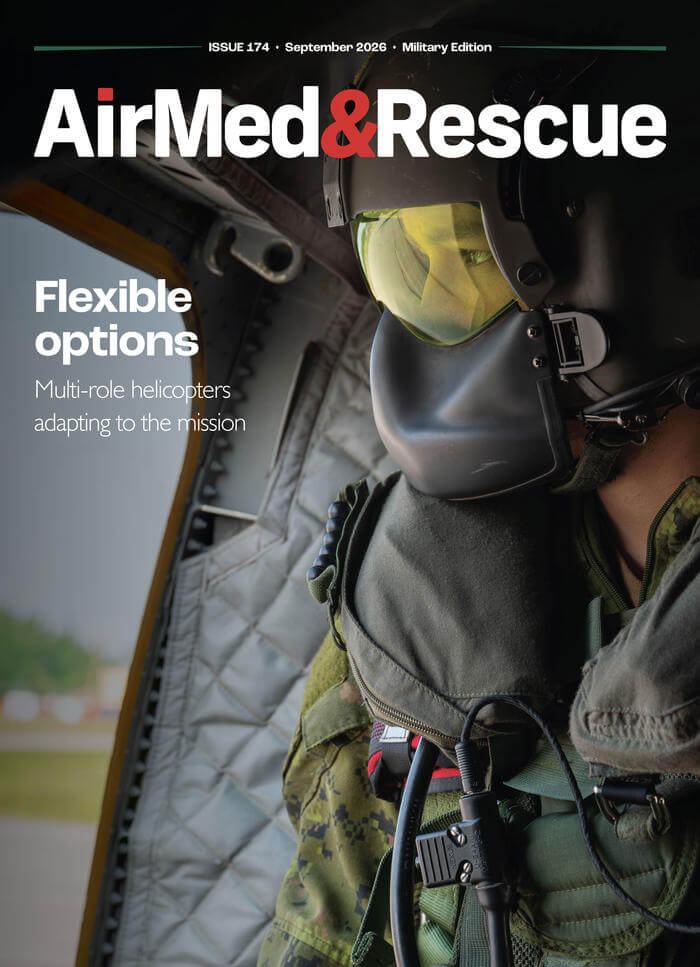
As we reach the equinox, I’m happy that we have an interesting military edition of AirMed&Rescue for you to read on those longer nights. We have features on the benefits of governmental institutions having a multipurpose helicopter; why military operators are at the forefront of exploring optionally piloted aircraft; how uncrewed aerial vehicles are serving as platforms for sensors that can operate in extreme situations; and on the equipment that is essential to carry on board an emergency medical services aircraft.
David Pearl
David is a former Navy pilot and an attorney specializing in aviation law. He defended pilots, aircraft manufacturers, airlines, and aviation businesses including several significant jury trials.
Flying and airplanes are his passion. Now a freelance writer, David writes for a wide variety of clients on range of topics.
Jon Adams
Jon is the Editor of AirMed&Rescue. He was previously Editor for Clinical Medicine and Future Healthcare Journal at the Royal College of Physicians before coming to AirMed&Rescue in November 2022. His favorite helicopter is the Army Air Corps Lynx that he saw his father fly while growing up on Army bases.