
Special missions in the Middle East and Africa

Chris Croot asks operators working across the Middle East and Africa about the various mission types they undertake, their mixed fleets, what challenges are unique to the region, and whether there are any gaps that still need filling
Though many governmental and military organizations conduct operations in the special missions realm, civilian operators also provide aerial firefighting, air medical transportation, surveying, and bespoke transport solutions. Larger organizations also offer maintenance services, not just for their own aircraft, but for external customers too. AirMed&Rescue reports on some of these key players working across the Middle East and Africa (MEA).
National Airways Corporation (NAC), headquartered at Lanseria International Airport, South Africa, is the largest general aviation company in Africa and, through its fixed-wing and rotary fleets, provides a range of general aviation and special missions. These services include helicopter emergency medical services (HEMS), fixed-wing medevac / air ambulance operations, aerial firefighting, humanitarian aid missions, aerial surveillance, game capture and conservation support, sling-load and platform operation, and remote personnel transport serving the gas/oil/mining industries.
Lloyd Warden, NACs’ General Manager – Fixed-Wing Operations, said: “Our rotor-wing division, particularly, has found wide application across oceanic and platform-based operations, remote African operations and support, and a very successful support for HEMS operations, while our fixed-wing services specialize in medevac, humanitarian aid, and oil and gas operations, all in parallel with our general aviation and charter operations.”
NAC is also a shareholder and operational capability provider for Universal Air Evac (UAE), a fixed-wing air ambulance provider, also based at Lanseria. UAE owns two Bombardier Learjet 35As, to provide emergency evacuations of critically ill or injured patients and bed-to-bed transfers for patients requiring specialized treatment in another city or country. The organization operates both domestically and internationally, which it says “provides seamless continuity of care from point of departure to handover at the destination”.
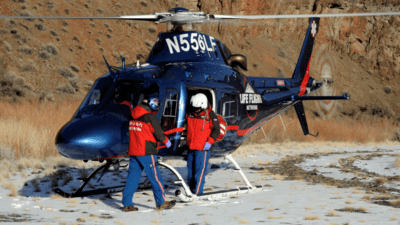
Conducting special missions across the Middle East, Abu Dhabi Aviation (ADA) is the largest commercial helicopter operator in the region. One of the company’s primary operations is the transfer of offshore oil drilling workers around the Abu Dhabi coast. ADA also provides rotary VVIP charter / air taxi services, aerial photography services, external load carrying, aerial firefighting, disaster relief, HEMS, and search and rescue (SAR). The organization uses its fleet of Dash 8s for regional passenger operations.
Air Rescue Africa is a bold new joint venture between Air Rescue UK and Westair Aviation Group and Medical Rescue Africa (MRA) to supply helicopter hoist operations services in the African region. Trevor Abraham, Managing Director of Air Rescue UK, explained the background for providing this service: “The partnership was driven by a clear and growing need across the African continent for structured, reliable, and internationally benchmarked helicopter rescue capability. Africa has some of the most challenging operating environments in the world, from vast, remote areas, industrial expansion, major offshore activity, and developing HEMS systems.
“Since late 2020, Air Rescue UK had been supporting operations in the region on an ad hoc basis. What we saw consistently was the same gap: highly capable local operators, but a shortage of structured training pipelines, technical crew development pathways, and sustainable rescue frameworks. The joint venture with Westair and MRA formalized what we were already building: local capability, local employment, and local ownership, supported by ARUK’s international experience, training systems, and governance. Air Rescue Africa allows us to address those gaps in a scalable, credible and long-term way.”

Fleets and equipment
NAC’s mission-capable fixed-wing platforms include the Learjet 35A, which is primarily used for long-range medevac missions, and the Beechcraft King Air B200 and 350, and Beechcraft 1900D. Warden noted the King Air and 1900D were “optimal for multi-patient transport, short field operations and remote, rugged environments”.
UAE’s Learjets are equipped to intensive care unit (ICU) standard for both adult and pediatric care, and have an isolation capability for infectious patients. Both aircraft are permanently configured, unlike modified charter aircraft, which UAE said “ensures the highest standards of safety and readiness”.
Standard equipment on board includes multi-parameter monitors with 12-lead electrocardiogram (ECG), end-tidal carbon dioxide (ETCO2), peripheral oxygen saturation (SPO2), invasive pressure monitoring, and pacing/defibrillation; transport ventilators capable of invasive and non-invasive ventilation for adults and children as small as 5kg; infusion pumps, syringe drivers, and portable blood chemistry analyzers for critical care management; portable negative pressure isolation units for infectious patient transport; and comprehensive sets of ICU medications, immobilization gear, suction units, and advanced airway management tools. UAE said this equipment fit “allows us to provide true ICU-in-the-sky capability, ensuring continuity of critical care throughout the flight”.
Africa’s geography – from deserts to dense forest – means fixed-wing assets are critical as they combine range, speed, and ICU-level care capability in one platform
UAE’s base at Lanseria International Airport, Johannesburg, is in a prime location for operations and allows the company to “efficiently service Southern Africa, the African continent, and beyond”. Fast, fixed-wing aircraft, like the Learjet, are ideal for transiting Africa’s vast and remote distances. UAE said: “Africa’s geography – from deserts to dense forest – means fixed-wing assets are critical as they combine range, speed, and ICU-level care capability in one platform.” For long-haul missions into the Americas and Europe, UAE coordinates with regional partners to provide wing-to-wing transfers.
Air medical aircraft come with approved supplemental type certificates (STCs) for stretcher kits, advanced life support (ALS) equipment, oxygen systems, and revised cabin configurations to support their role. Warden said: “We provide in-flight care, utilizing a combination of a flight doctor and nurse or paramedic – a true air ambulance.” The Learjet’s speed and range permit NAC/ UAE to conduct missions across Africa, into Europe, the UK, and the Middle East. The aircraft are also efficient on shorter missions across the Southern African Development Community (SADC) region, and Warden reported they rival turboprop aircraft on both cost and performance.
NAC’s rotary-wing special-missions-capable fleet consists of Bell 407 and UH-1 aircraft, which are used primarily for sling-loading and maintain an aerial firefighting capability using Bambi Bucket and Cloudburst water-dispensing equipment. Bell 206 Jet Rangers and Long Rangers, and Robinson R22s form the remainder of the fleet and are used for survey, wildlife conservancy, mining inspections, power line inspections, high-value cargo delivery, filming, vehicle tracking (in partnership with Netstar), safari tours, and charter flying.
ADA maintains a fleet, at the time of writing, of 68 aircraft, of which 61 are helicopters. The company’s diverse rotary-wing fleet is made up of AgustaWestland 139 and 169, Bell 212 and 414, and Airbus H145 helicopters. A fleet of Bombardier Dash 8s (Q200, Q300 and Q400) makes up the fixed-wing complement.
Abraham detailed the facilities and equipment available to the hoist operators in Africa: “Air Rescue UK uses a full spectrum of training and operational assets designed to mirror real-world complexity while significantly reducing risk. For training, this includes:
- Helicopter Mission Training System (HMTS) from Bluedrop Training & Simulation – a fully recordable, repeatable hoist simulation system used for initial, recurrent, and advanced scenario training
- Virtual reality (VR) and procedural simulation suites – for critical decision-making, crew resource management, and human factors development
- Dedicated training classrooms and briefing spaces at our bespoke training center, Sentinel House.
Operationally, Air Rescue Africa benefits from the capabilities of Westair Aviation Group and MRA, including:
- Twin-engine helicopters with Class 1 performance
- Overwater and vessel training opportunities conducted with local partners in controlled environments
- Certified hoist installations
- Medical capability bolstered through MRA’s highly experienced paramedic teams
- Established logistics, engineering, and operational support infrastructures.
“This combination means training and operations run to the same standards and expectations.”
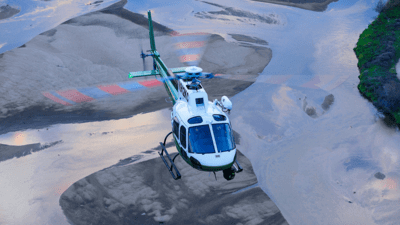
Maintenance and training
NAC is an approved Aircraft Maintenance Organisation (AMO), proudly bringing self-sufficiency: “We are certified to maintain all the aircraft we operate with excellent workmanship from our maintenance teams and the support from our original equipment manufacturers (OEMs) and their representatives,” said Warden.
For its rotary operations, NAC is the only Bell Helicopters Customer Service Facility in Sub-Saharan Africa. The organization is certified to provide maintenance services, including overhauls for 206, 407, 222, 230, 430, and 412 models, and structural repairs for the 206B and 206L.
NAC is also the only Rolls-Royce Model 250 (C20, C30, C40, C47, B17) and RR300 engine Authorised Maintenance Centre on the continent. This allows NAC to provide approved part sales, repairs, and overhauls for the aforementioned engines.
As an accredited Aviation Training Organisation (ATO), NAC delivers trade training for aircraft maintenance mechanics via a two- to three-year apprenticeship after which students can apply to sit a trade certification exam. For the first 12 months, students undertake theoretical and practical training with NAC, with selected students then seconded to departments within the business to conduct on-the-job training (OJT). Other students are required to source OJT within other approved AMOs. This training must last no less than 18 months.
NAC is also approved to provide rotary training including PPL(H), CPL(H), ATPL(H), night rating, type and class ratings, instrument rating (IR), instructor ratings, and turbine conversions. It also offers training in special missions including sling/external load and wildlife monitoring/capture. Flight training is conducted in Robinson R22s and R44s, and Bell 407s, Jet Rangers, and Long Rangers.
In addition to its special missions operations, ADA is a Part 145 Maintenance Organisation. Its facilities hold Airbus, Leonardo, and Bell rotary-wing service center status, as well as De Havilland fixed-wing approvals. ADA can offer structural repairs to Bell 212/412 series helicopters and holds “one of the very few Bell Helicopter Textron approved 205/212/412 tail boom jigs outside Europe and North America”.
Other maintenance services include those of a Continuing Airworthiness Management Organisation (CAMO) – managing the airworthiness compliance of aircraft through the issuing and renewing of airworthiness review certificates (ARC), and carrying out independent airworthiness reviews.
A wheel and brake facility provides complete tear-down and rebuild, while an engine shop offers internal borescope inspection, plus engine and propeller replacement for Pratt & Whitney PW100 series engines. Two paint shops able to accommodate aircraft up to Dash 8/ATR 72 series size are also available.
Our vision is simple: international expertise to establish the system; national talent to own and sustain it
Explaining the goals of Air Rescue Africa regarding the training pathways and organizational structure, Abraham said: “Our vision is simple: international expertise to establish the system; national talent to own and sustain it. We have already identified and trained the first cadre of Namibian technical crew in the winchman role and we are now looking to invest time and resources to build a structured pathway from rear-crew trainee è competent operator è instructor.
“The long-term goal is a self-sustaining ecosystem, where local crews, instructors, and managers run the operation end to end, with Air Rescue UK providing governance, innovation, and high-end specialist support.”
Abraham added: “Because our training is aligned with recognized international frameworks and delivered through advanced simulation and structured competency assessment, operators trained under Air Rescue Africa will become fully competitive for roles globally as their experience and exposure grows.
“This will have a positive outcome for two reasons:
- demonstrates that multinational technical crew are meeting and exceeding global standards, often matching the performance of much more experienced markets
- provides long-term career pathways that help attract and retain high-performing individuals within Africa’s developing aviation rescue sector.
“Ultimately, our philosophy is that talent developed in Africa should be able to stand confidently on any stage, regional or international.”

Contracts and future demand
ADA holds contracts with a number of military and governmental organizations of the United Arab Emirates, notably for SAR operations in support of the National Search and Rescue Center (NRSC). In addition to a SAR capability, ADA provides 24-hour air ambulance coverage for all Abu Dhabi-based oil companies. Using modified Bell 412s, the service covers both desert and offshore patient recovery.
NAC is partnered with Netcare 911, a major emergency medical service (EMS) provider in South Africa, using Bell 407s, primarily for daytime missions, from Gauteng, on behalf of Mpumalanga Department of Health. The organization also uses the twin-engine Bell 430 operating from bases at Gauteng, Durban, and Cape Town. The partnership delivers rapid medical intervention and patient recovery.
Despite UAE’s work, there is still a need for more HEMS capability across Africa. “There are significant gaps in aeromedical coverage across Africa,” the company said. “While South Africa has relatively strong capabilities, many regions across the continent lack adequate HEMS for immediate response, particularly in rural and wildlife areas such as the Kruger National Park and other remote reserves.”
UAE also spoke of the limitations of cross-border medical evacuation capability, noting that these shortages of domestic operators could leave patients reliant on international providers. There is a need for continent-wide, integrated air medical networks: “At Universal Air Evac, we are working to bridge these gaps by providing fixed-wing capability across Africa and partnering with HEMS providers to ensure patients receive the care they need, wherever they are.”
There is a demand for humanitarian aid, significant developments in infrastructures and economies, and this creates a need to connect people to people, or supply goods and products to people
These are views echoed by Warden: “There is a demand for humanitarian aid, significant developments in infrastructures and economies, and this creates a need to connect people to people, or supply goods and products to people. We have beautiful lands and oceans, rich with resources, which still need to be explored, protected, and/or supported. And, there is a significant need for vital lifesaving air support. Africa is the place to be,” said Warden.
“We do, however, believe that operators must resist the temptation to chase volume at the cost of sustainability. Cutting corners to win contracts undermines the sector long term. NAC’s model is built for longevity, compliance, and meaningful impact, and we remain ready to meet the next frontier of Africa’s aviation demands,” he added.
Warden told AirMed&Rescue that NAC was always vigilant for new opportunities, but the organization’s nearly 80 years of experience had provided it with the “wisdom and knowledge to have made accurate decisions with the platforms we currently operate, and plan to operate in the future”.
He added: “Through our 80 years, NAC has been fortunate to participate in nearly every special mission aviation tasking. Whether it’s aerial game capture, surveillance, humanitarian response, HEMS and air ambulance – you name it, we’ve probably done it.” Any new special mission operations would need to meet a balance of risk versus reward to the company, its employees, and customers. Fleet sizes may grow subject to demand or if a new, alternative platform enters the market.
There is clearly a market in the African continent and globally, and Abraham is proud and hopeful of the work that Air Rescue Africa is doing in the region: “At present, taskings for Air Rescue Africa are solely centered in Namibia, with a mixture of EMS, SAR, and specialist transport requirements. However, we are hopeful that our African footprint will continue to grow.
“Through Air Rescue UK, our teams also support operations in the region through our partnership with Heliconia Aero in Senegal. In Europe we operate in Romania, again with Westair and its local partner Regional Air Services, and of course we retain our operations in the Falkland Islands, where the Air Rescue UK journey started. Occasionally we reach other regions where specialist hoist capability is needed.
“Looking ahead, Air Rescue Africa’s model is designed to be exportable. We are already seeing interest from:
- West and Central African states seeking structured SAR capability
- Offshore energy partners requiring competent hoist and rescue coverage
- Governments looking to build national emergency aviation frameworks.
“Our goal is not rapid expansion for its own sake; it is sustainable, locally anchored capability wherever the need and partnerships are right.”
Demands on special missions operators are only likely to grow in response to increasing global populations, economic expansion, and climate change. How operators will adapt to these factors, as well as advances in technology – the rise in uncrewed platforms, for example – is to be seen. It stands to reason that some roles, such as aerial surveys or load carrying, may well be taken over by uncrewed aerial vehicle (UAV) systems.
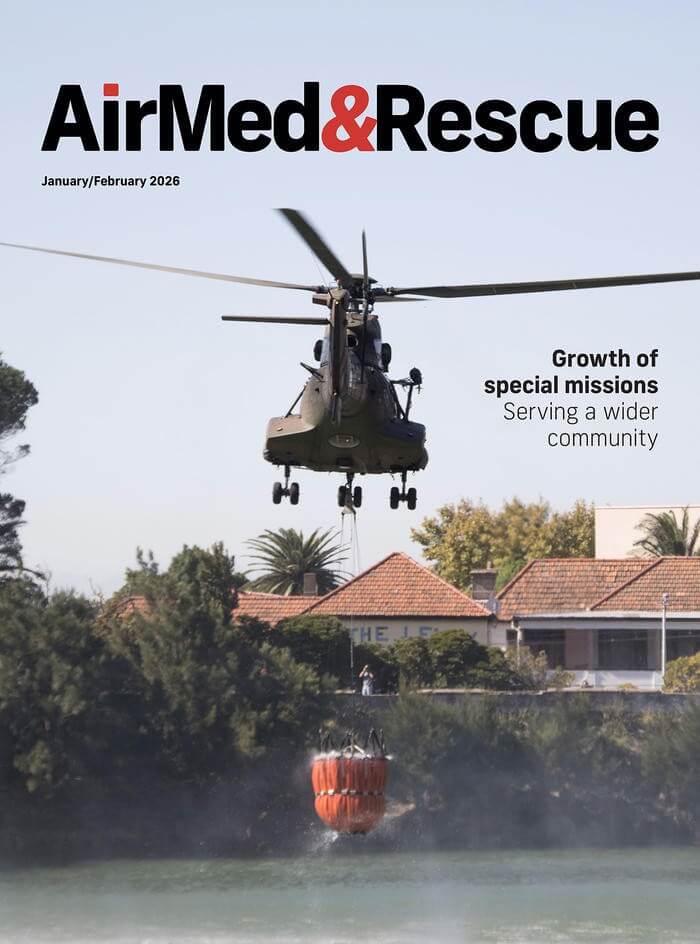
January 2026
Issue
A new year and a new edition, and with it comes articles relating to special missions from all across the globe. We have features that look into the special missions in the Middle East and Africa; the benefits and differences associated with leasing helicopters; and the way that aerial firefighting is conducted at night.