
Suited for the mission: exploring flight suits

Oliver Cuenca talks to members of the emergency aviation sector to find out what they look for when choosing a flight suit for their crew
For emergency aviation crews, a flight suit is far more than a standard workplace uniform. It is a vital piece of personal protective equipment tasked with shielding clinicians and aircrew from thermal, mechanical, and chemical hazards. Whether responding to a complex rescue scene or operating within the tight confines of an aircraft cabin, this clothing must deliver peak performance under intense operational pressure.
However, sourcing the ideal garment involves a myriad of choices – between traditional one-piece suits versus two-piece ones, and between standardization and customization.
Standardization versus customization
For Vegard Landsem, HEMS Crew Member at the Norwegian Air Ambulance, his organization places an emphasis on standardization when it comes to purchasing flight suits, “with the same make and model used by all crewmembers”.
There are a number of benefits to this approach – as well as being more cost-effective, having a specific uniform ensures that operational needs are met, and that individual suits can be easily fitted to crew.
“The uniforms are produced according to the requirements of our uniform committee and tailored to our operational needs,” Landsem said, adding that “for most crewmembers, it is easy to find the correct fit among the available sizes. The uniform is offered in a full range of sizes and in three different length options. When alterations are required, this is handled either through self-adjustment or by using a professional tailoring service.”
Landsem added that the flight suits were typically “quite durable”, and that despite his organization’s official service life for them being three years, they could realistically be used for longer. When “combined with additional protective or insulating clothing depending on weather conditions, they do not need frequent replacement”.
A spokesperson speaking on behalf of the paramedic team at London’s Air Ambulance Charity agreed, stated that the charity “issues each new member of staff a standard-design flight suit, designed by end users within the organization, who have decades of experience undertaking the role, and therefore understand the requirements of the specification”.
However, they added that beyond what had already been designed, “the suit is not customizable”, due to the desire to ensure a uniform look and appearance “across the entire clinical team”.
Evan Southern, Director of Flight Operations at Canada’s STARS (Shock Trauma Air Rescue Service), reported that a similar ethos prevailed at his organization, driven in part by a desire for coherent and recognizable branding.
“Our flight suits are our uniform,” he said. “They are a highly recognizable symbol to our supporters in the community, and our air medical crews are often referred to as ‘blue suiters’ in reference to the color of our flight suits.”
They are a highly recognizable symbol to our supporters in the community, and our air medical crews are often referred to as ‘blue suiters’ in reference to the color of our flight suits
By contrast, Jeff Hooper, Medical Director at LifeFlight Australia, said that his company offered a fairly high level of customization for its crews’ flight suits, giving a better fit and better functionality.
“LifeFlight has a customizable flight jacket and pants that have been designed to be practical with multiple pockets,” explained Hooper. “They have safety features such as reflective strips and fire-retardant material, [and] they’re comfortable with knee pads and an adjustable waist strap.”
However, this often leads to longer wait times before crew can be provided with their new flight suit, as “while measurements are taken prior to new crew starting at LifeFlight, due to customization, there can be a lag time in production”.
This, Hooper said, can be especially challenging “when onboarding a large group”.

Form and function
Landsem explained that his organization uses a “full-body flight suit that is flame-retardant and functions as effective protective clothing both during flight operations and while treating patients at accident sites. Our flight suits also have protective patches and padding on knees and elbows.”
However, he added that “one drawback of a full-body suit and additional padding can be high temperatures during some summer days”.
Consequently, Landsem explained that Norwegian Air Ambulance had introduced a “lighter summer version” with a thinner garment to help alleviate this challenge.
“It is important that employees work in clothing that provides effective protection both during flight operations and in pre-hospital emergency work,” he explained. “We have previously conducted a user survey across all crew categories, and the majority still prefer the use of a full-body suit.”
It is important that employees work in clothing that provides effective protection both during flight operations and in pre-hospital emergency work
Despite this, Landsem reported that other options, such as two-piece uniforms, separate male and female versions, stretchable inserts, or additional design variations, were continuously being considered. “Logistics and costs must also be taken into account,” he said.
“The model we use includes practical pocket configurations suitable for all crewmembers and the tasks we perform together,” he added. “When selecting operational clothing for our crews, it is essential to establish a uniform committee. This ensures a standardized and mission-appropriate solution for the entire crew, tailored to the tasks they are required to perform jointly.”
Landsem explained that, currently, his organization aims to maintain “only one primary type of flight suit – the summer version. This means crew must adapt, with appropriate undergarments or outer layers, depending on the mission or current weather conditions.”
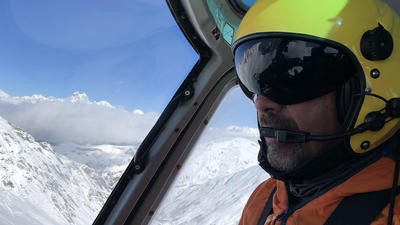
However, he added that flight suits were not mandatory for all missions that Norwegian Air Ambulance performs, and that alternative clothing may be selected if mission requirements or weather conditions make this more appropriate.
The spokesperson from London’s Air Ambulance Charity explained that their flight suits needed to offer a range of functionality to ensure that the crew can perform their jobs effectively. This includes “protection from adverse weather, varying levels of protection against thermal, mechanical, and chemical hazards, with the ability to carry essential clinical equipment and operational communications devices”.
They added that the flight suit design drew on a number of different industry standards, such as highway and railway regulations.
Examples of these regulations denote specifications detailing the reflective striping and color of fabric to ensure conspicuousness of the clinician
“Examples of these regulations,” the spokesperson explained, “denote specifications detailing the reflective striping and color of fabric to ensure conspicuousness of the clinician.”
Washability, durability, and a good fit
Washability is critical for operators, due to the frequent use of flight suits and the intensity of the work carried out while wearing them, which often results in sweat, as well as potential exposure to a range of undesirable materials, for example blood, while responding to medical incidents.
The London’s Air Ambulance Charity spokesperson explained that their team’s suit utilizes materials treated to offer a high level of protective qualities, allowing for easy washability and hygiene. They added that the suits were cleaned “at least after each shift, or more frequently if required”, using washing facilities at the charity’s base.
Hooper reported that LifeFlight’s flight suits were also designed to be “easily machine-washable, ensuring appropriate hygiene, and the ability to decontaminate between shifts”.
Beyond washability, suits also need to be a good fit for individual crewmembers to ensure that they can perform at their best while wearing them.
“Flight suits need to be appropriately sized, comfortable, and breathable,” said Hooper. “They need to have functional zip pockets for pens and equipment. They also need to have reflective panels for night operations and a clearly labelled flight jacket that shows their role, for example aircrew, doctor, and nurse.”
Flight suits need to be appropriately sized, comfortable, and breathable. They need to have functional zip pockets for pens and equipment. They also need to have reflective panels for night operations and a clearly labelled flight jacket that shows their role
“Our flight suits are sized and altered at a tailor before first use,” said Southern. “Crewmembers can acquire new ones as they wear out or as otherwise required.”
He explained that flight suits needed to perform a range of different roles: “They need to be comfortable, breathable, fire-resistant, utilitarian (i.e. useful pockets), and they need to look professional and suitable for the public-facing role we are in.”
London’s Air Ambulance Charity stated that its own suits were “ordered against the best fit sizing chart, which in the main delivers a good fit”. However, the charity will order adjusted sizes if necessary, to ensure that the crewmember has the correct fit before being deployed operationally.
The charity’s spokesperson also added that their team’s flight suits were designed to last “a number of years – 12 months of full-time use, and then subsequent years of intermittent use”.

Dressing for success
Alongside functionality while wearing flight suits, consideration is often given to how quickly crew can put on and take off their suits to ensure that they can get going as fast as possible.
Hooper explained that due to the need for rapid deployment, LifeFlight “moved from a full overall flight suit to a jacket and pants many years ago”, allowing the wearer to wear casual clothing for the majority of their shift until deployed.
Likewise, the London’s Air Ambulance Charity spokesperson added that while their own two-piece suit was worn for the entirety of the operational shift, “with the option to remove the jacket when on standby”, the outfit “can be doffed and donned very quickly with the single front zip” as needed.
The outfit can be doffed and donned very quickly with the single front zip
By contrast, Landsem explained that his organization uses a “traditional flight suit design”, with no design changes made to “facilitate faster dressing and undressing”.
“We do remove the flight suits after missions in a designated work wardrobe area, to reduce the risk of contamination and keep dirt away from the living quarters,” he added. “We consider a one-piece flight suit to be slightly faster to put on than a two-piece uniform, although we have not formally tested this.”
Not one size fits all
Ultimately, there is no single blueprint for the perfect flight suit – each operator must balance the competing demands of climate, cost, and customization to suit their unique operational environment. Whether an organization opts for the traditional security of a one-piece suit or the rapid-deployment flexibility of a two-piece design, the insights from frontline crews remain the most valuable guide. By prioritizing durability, simple decontamination, and practical comfort, airborne emergency teams can ensure that their clothing is as resilient and adaptable as they are.
August 2026
Issue
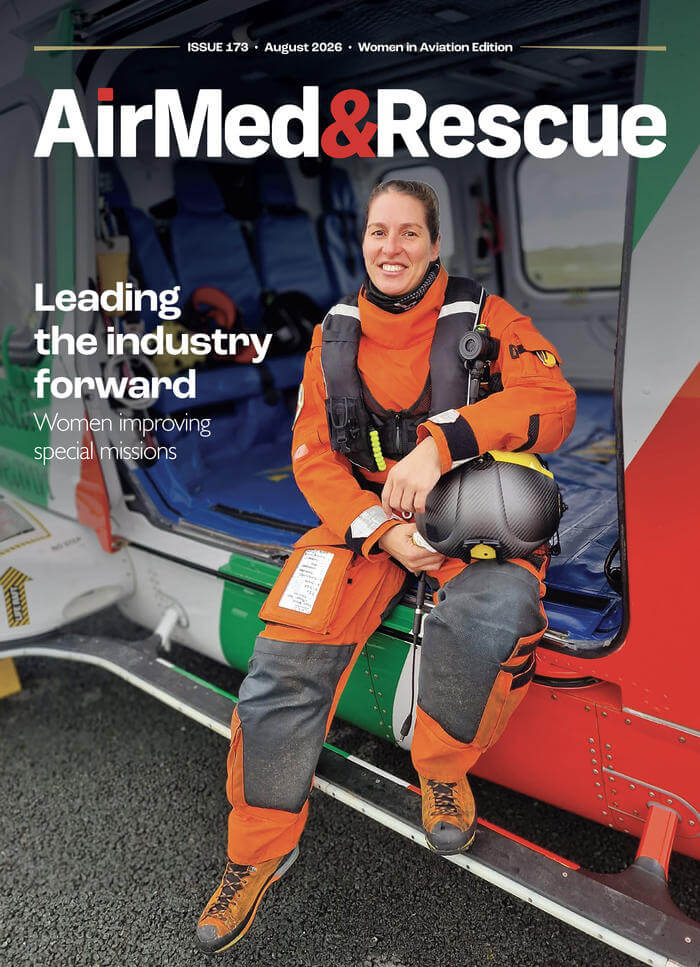
August is a special time of year, and it is my pleasure to present a special Women in Aviation edition of AirMed&Rescue. We have features on the importance of preventing and knowing the early signs of hoist spin; the leadership roles and the value of visibility of women in the industry; the inward-facing and external sensors improving special missions; and the variety and standards that flight suits have to meet.
Oliver Cuenca
Oliver Cuenca was a Junior Editor at the Voyageur Group. He was previously a News and Features Journalist for the rail magazine IRJ until 2021, and studied MA Magazine Journalism at Cardiff University. His favourite helicopter is the AW169 – the workhorse of the UK air ambulance sector! He also led the creation of Waypoint: The AirMed&Rescue podcast, serving as its Production Editor and co-host.